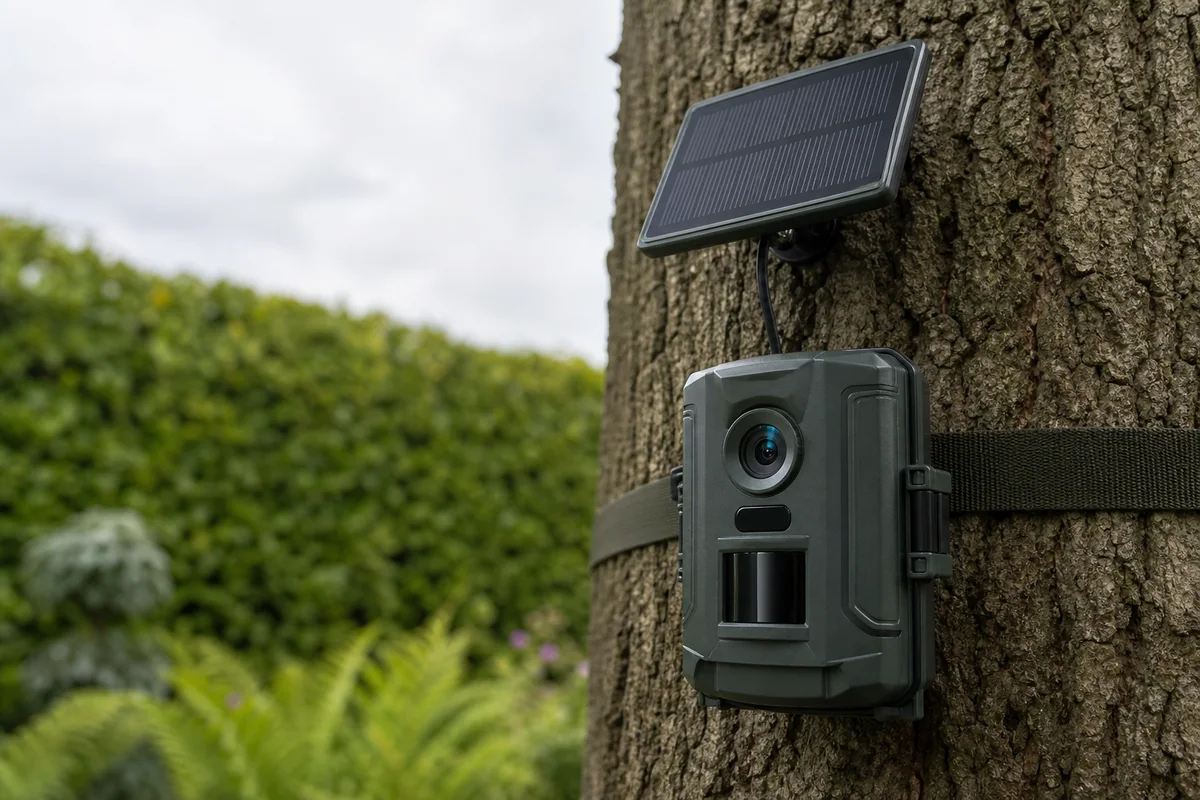
A small solar panel can extend time between charges, but winter output depends on light, angle, shade, temperature and camera activity.
Read “solar powered” carefully
Many products are battery cameras with solar assistance. The panel tops up an internal battery; it does not power every feature continuously. Confirm whether the battery is replaceable, the panel can be repositioned and the camera operates while charging.
Winter planning
Use the brightest practical position with a clear southern aspect, clean the panel and expect lower yield on short overcast days. High notification frequency, live viewing and colour night modes can consume more power than passive recording.
A defensible test
Record starting battery percentage, daily event count and remaining charge at the same time each week. Run the camera first with conservative settings. If charge trends downward, reduce live access or plan manual charging rather than assuming the panel is faulty.
Sources and review standard
This guide is editorial information for UK consumers. Product-specific claims must be checked against the linked primary source. Wildlife, privacy and electrical-safety guidance should be confirmed against the responsible official body where it affects a live installation.
The panel must replace the energy used by standby, recordings, radio connections and live viewing. If weekly charge is falling, the system is not energy-neutral in that position even when the panel receives some daylight.
Run a four-week trend test
Begin with a fully charged battery, stable settings and a cleared event counter. At the same time each week record charge, event count, live-view use and any manual charging. A single sunny day is not representative. The trend is more useful than a merchant runtime claim because motion frequency, temperature, signal strength and clip length differ by garden.
Panel position can conflict with camera position
A built-in panel may need sunlight while the lens needs shade from low sun and rain. A separate panel offers more freedom, but its cable must be protected and installed according to the manufacturer instructions. Never compromise a tree, nest site or animal route to chase a small gain in light.
- Know whether the battery is replaceable or serviceable.
- Keep a safe manual charging interval.
- Reduce unnecessary live view and repeated alerts.
- Clean the panel without disturbing wildlife.
- Check the stated charging-temperature limits.
For an integrated feeder panel, compare the practical limits in the bird feeder camera guide. For wider garden monitoring, compare power with storage and connection requirements in the UK garden camera guide.